What We Do
AUTOSAR, a standardization organization for automotive software platforms, has been developing the AUTOSAR Adaptive Platform (A2P) for high-performance automotive computers since 2016. Since 2018, NCES has participated in the AP System Test WG (WG-AP-ST) as an AUTOSAR Development Partner, collaborating with member companies with the following goals:
- Understand A2P specifications and the prototype implementation APD (Adaptive Platform Demonstrator) to accumulate know-how
- Provide technical support for system development using A2P in member companies
- Contribute to AUTOSAR from Japan by participating in joint APD development, leveraging NCES's accumulated embedded system technology
Contact
Nagoya University Center for Embedded Systems
464-8601
NIC 508, Furo-cho, Chikusa-ku, Nagoya
Phone: 052-789-4228
Email: a2p-staff@nces.i.nagoya-u.ac.jp
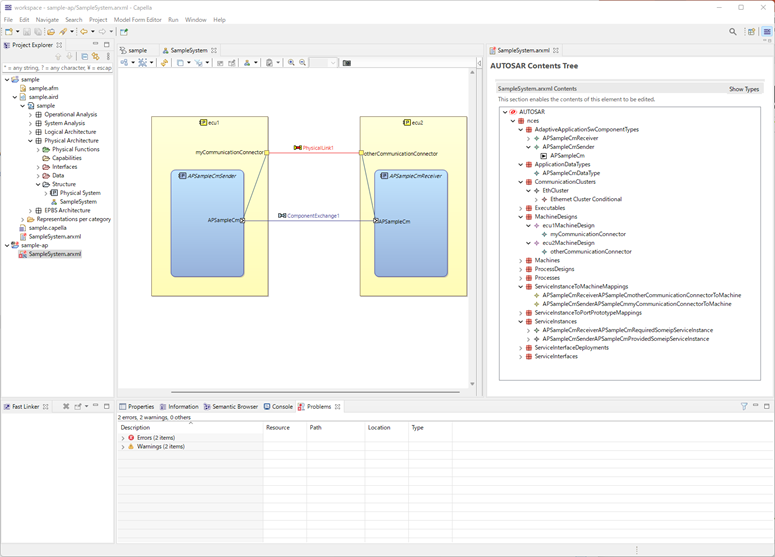
Design Tool Study and Prototype
We studied model transformation from MBSE tools to AP and prototyped a tool for verification. The results of this research were presented at ETNET2022 under the title 'Visual Modeling and Design Methods for AUTOSAR Platform Using MBSE Tools.' This tool enables visual modeling design of AP using MBSE tools.
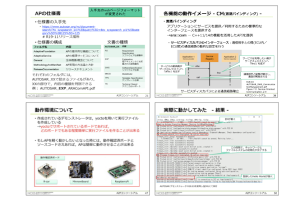
Specification Guide
AP specifications are freely available for download and viewing, but the number of files and content is extensive. To quickly understand the content of interest, we have created Japanese guides limited to major functions.
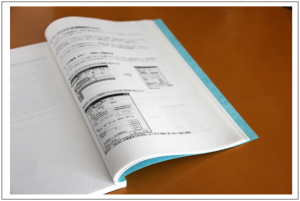
Application Development Environment Setup Manual
Various preparations and settings are required to start application development using APD, and in many cases, build errors are frustrating. To save time and focus on application development, we have developed environment setup manuals (procedures) compatible with various target boards and versions, as well as automated application development environment construction methods using virtual machines and Docker containers.

Sample Applications
In the prototyping stage before full-scale application development, it is important to understand major functions and programming methods in a short time. We have independently developed simple sample application programs for each major function. Combining these can promote application development.
Demo Kit Using RaspberryPiMouse (RPM)
We developed a demo program that operates RPM, developed for ROS (Robot Operating System), using AP. With a PC and RPM, you can immediately run control applications using AP and understand the operation image. A simulation environment is also available for experience with only a PC, even without the actual RPM. Educational materials using this demo kit are also under development.
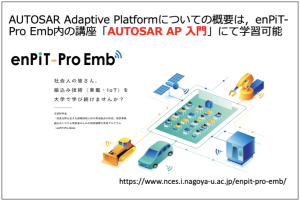
Training Course: AUTOSAR AP Introduction
As part of the enPiT-Pro public course for working professionals, we offer a one-day training course 'AUTOSAR AP Introduction' where you can learn the basics of AP.

Training Course: Embedded C++
As part of the enPiT-Pro public course for working professionals, this one-day intensive course teaches the basic knowledge and programming skills of C++ language that all embedded software engineers should master.
License Sales of Results
We provide paid licenses for using the results. It can significantly reduce the time to understand AP and start prototyping applications. For details on sales content, license format, and pricing, please contact us.
Join Us
NCES is constantly recruiting member companies. Please watch the video below and contact us by email if you are interested.
A2P Consortium Introduction
We introduce the overview of the A2P Consortium, benefits of participation, participation format, and intellectual property handling. The content is as of November 2020.